Information
Landmark: St. George MonasteryCity: Kumanovo
Country: North Macedonia
Continent: Europe
St. George Monastery, Kumanovo, North Macedonia, Europe
Overview
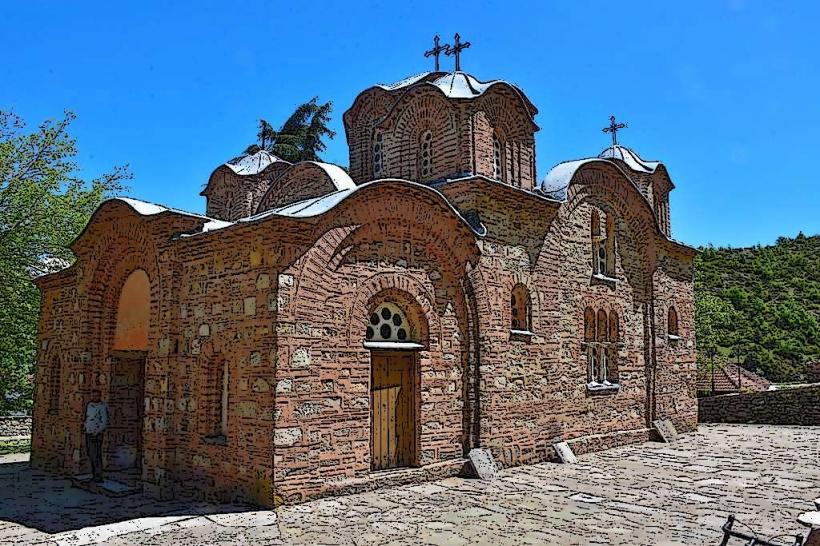
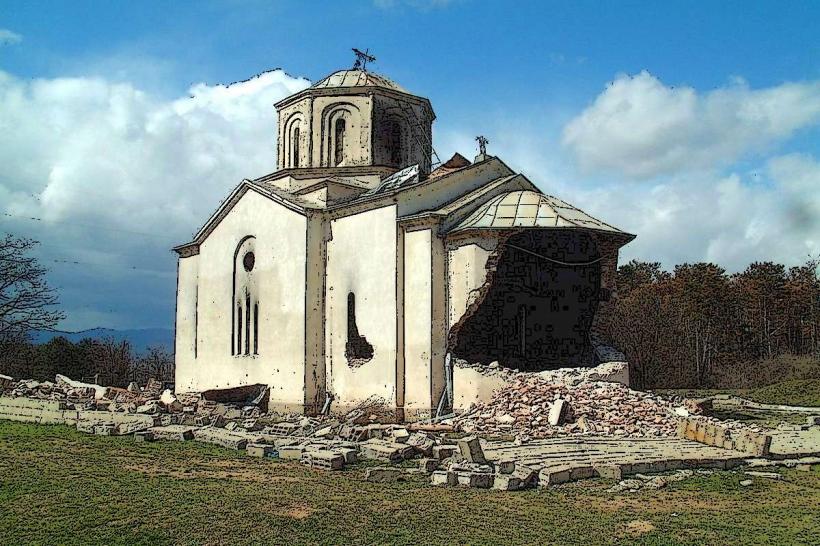
The St, what’s more george Monastery (Serbian: Manastir Svetog Đorđa) stands out as a revered Orthodox Christian site in North Macedonia, its stone walls weathered by centuries of wind and sun.Dedicated to Saint George, the monastery stands as one of the region’s most treasured religious and cultural landmarks, its stone walls cool even in the midday sun, besides in the Eastern Orthodox Church, Saint George is honored as a martyr and the patron saint of many places, from quiet villages to North Macedonia.The monastery stands at the heart of the town’s faith and history, its stone walls weathered by centuries of wind and prayer, on top of that location and Setting: The St. George Monastery sits tucked away in the quiet countryside of North Macedonia, where the only sounds are rustling leaves and distant church bells, in turn it’s usually tucked away in a quiet rural valley or up in the mountains, chosen for its sense of solitude and deep bond with the surrounding forest and sky-hallmarks of Orthodox monasteries, mildly This one stands near Kumanovo, a town in north-central Macedonia, though the name St, alternatively george can belong to several monasteries in the area.Tucked far from the clamor of city streets, the quiet grounds invite reflection, prayer, and spiritual practice, and the St. George Monastery traces its roots to the medieval era, likely the 14th century, at the height of the Ottoman Empire in the Balkans, what’s more back then, Orthodox Christianity shaped the region’s culture and faith.Oddly enough, To honor Saint George-revered for his courage and martyr’s death-the monastery rose in stone, its bells echoing across the hills, then people often picture him as a warrior saint driving his spear into a dragon, a fierce image of good triumphing over evil.The monastery stood as both a spiritual refuge and a gathering site, where villagers learned their faith, sought counsel, and safeguarded their culture through the harsh years of Ottoman rule, alternatively st, fairly Not surprisingly, George Monastery became a steadfast guardian of Orthodox traditions, keeping religious practices alive amid political turmoil and foreign control, furthermore during the Ottoman era and later under Yugoslav rule, it became a refuge for Orthodox Christians, a locale where candlelight flickered against ancient stone walls.In a way, Its significance reached beyond faith, shaping the region’s culture as well, equally important the site safeguarded the iconography, liturgical traditions, and other elements of Orthodox Christianity, passing them on to future generations.The St, equally important george Monastery reflects traditional Serbian Orthodox architecture, marked by the stone arches and domes typical of medieval Byzantine design.Most churches are built of stone or brick, laid out in a simple rectangle with a dome or bell tower rising over the central nave, at the same time around them, the monastery might spread into a cluster of buildings-a main church, monk’s quarters, a quiet library, and maybe even a slight guesthouse for weary pilgrims.The buildings often mirror the hierarchy of Orthodox monastic life, with the church standing at the heart of the complex, its doors opening toward a carved wooden iconostasis that shields the altar from the nave, and walls alive with rich, painted frescoes, simultaneously the iconostasis usually gleams with painted icons of saints, Christ, and the Virgin Mary.Inside the monastery church, the walls may bloom with rich Byzantine-style frescoes-deep blues and golds showing biblical stories, the life of Saint George, and other sacred scenes, while the monastery, dedicated to Saint George-one of Eastern Orthodoxy’s most beloved saints-stands where faith and art meet, its walls covered in frescoes rich with spiritual meaning, glowing with gold and deep blues that speak of heaven, and admired for both their beauty and their symbolism.People honor Saint George for his bravery and sacrifice, seeing him as a steadfast symbol of triumph over evil-like a lone rider defeating a shadowed beast, likewise on April 23, the monastery marks his feast day with a major celebration that draws pilgrims from nearby villages, incense drifting through the air.Saint George, the patron saint of soldiers, knights, and farmers, appears often in Orthodox icons, his figure poised with shield and spear, in conjunction with in some regions, people believe Saint George shields them from illness and bad luck, which makes him vital both in faith and in daily life.Somehow, At St, after that george Monastery, monks rise before dawn to pray, then spend their days working and studying under the strict rules of the Orthodox Church.The monastery welcomes people seeking spiritual retreats, offering a region to pray, join in the steady flow of monastic life, and take part in daily liturgical services, then at its heart is the Divine Liturgy, surrounded by other sacred rites-baptism, weddings, and funerals-marked by the scent of incense and the quiet echo of chanting.At St, as a result george Monastery, the monks often welcome visitors and pilgrims, teaching and sharing the Orthodox Christian faith-sometimes over the scent of beeswax candles in the chapel.Interestingly, This monastery stands as a cornerstone of Orthodox heritage in North Macedonia, safeguarding the region’s traditions, history, and spiritual identity, as a result for centuries, the St. George Monastery has offered a quiet refuge for prayer and a gathering destination for local Christians, its stone walls echoing with hymns, at the same time it also holds a treasured area in the wider Balkan and Slavic Orthodox world, safeguarding ancient manuscripts, painted icons, and relics that illuminate the region’s Christian past.Beyond worship, it welcomes visitors eager to explore church history, Orthodox liturgy, and the traditions that shape monastic life, not only that the monks often guide pilgrims through lessons in Orthodox theology, sharing stories of the saints and explaining the meaning behind icons and rituals, like the scent of incense curling through the chapel.The monastery stands as a treasured piece of cultural heritage, drawing visitors curious about Orthodox history and the Balkan landscape, meanwhile over the years, St, relatively George Monastery, like many ancient Orthodox sites, has seen several rounds of careful restoration and preservation, likewise they’ve worked to protect its architectural treasures-the faded frescoes, the gleaming icons, and the sturdy monastic buildings-scarred over time by weather, war, or neglect.Keeping the monastery standing matters not just for its faith, but for the cultural identity it carries.
Author: Tourist Landmarks
Date: 2025-09-02